The different types of skylights are easier to sort than they first look. You are answering three separate questions, not picking one item off a long list.
Skylights Sort Three Different Ways
Every skylight can be described in three ways, and the three stack rather than compete.
How it opens covers fixed, manual, electric, and solar. You can only pick one. Shape covers standard pitched-roof units, flat-roof units, the wide-glass SkyMax line, architectural shapes, and sun tunnels. Mounting covers curb-mounted and deck-mounted, which matters for whether the unit sheds water properly.
A solar skylight can also be a flat roof skylight sitting on a curb. One product, three answers, which is why a lineup of seven options is really a much shorter set of decisions.
How It Opens: The Four Operating Types
Fixed Skylights
A fixed skylight is sealed glass. It doesn't open, so it has fewer moving parts and fewer places for water to get in. This is the workhorse of the category and the right pick when you want daylight and nothing else.
Fixed units suit stairwells, hallways, closets, and living rooms, or any space that already moves air well. They also make sense for high ceilings where nobody would reach an opening unit anyway.
Manual Venting Skylights
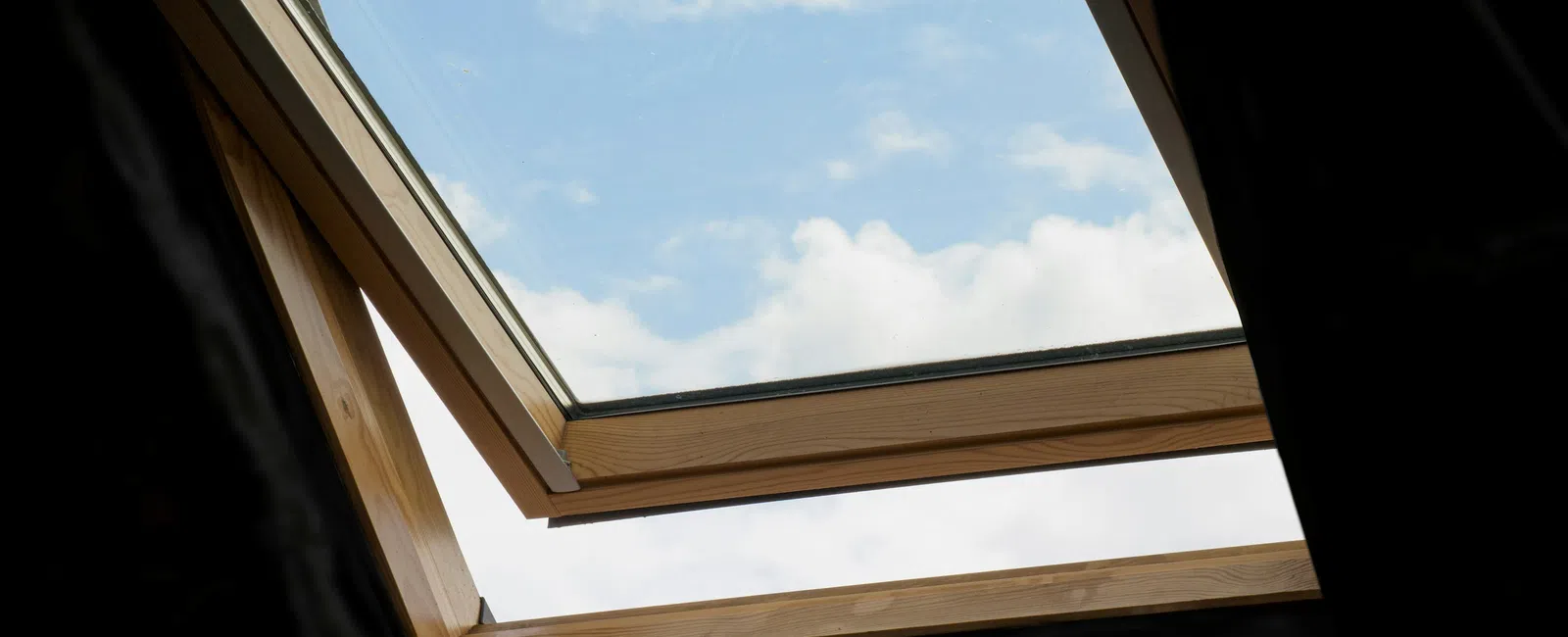
A manual venting skylight, listed as a Manual Skylight in our lineup, opens with a crank or a telescoping control rod. You turn it, the sash lifts, warm air leaves. No power, no remote, nothing to charge.
The tradeoff is reach. It works well over a stair landing or in a room with a nine-foot ceiling. Put one in a two-story great room, and you will quietly stop opening it by the second summer.
Electric Skylights
An electric skylight runs on a hardwired motor controlled by a wall switch or remote. Press the button, and the skylight opens. Ceiling height stops mattering, which is why motorized skylights show up in vaulted spaces and above kitchen islands. They fit best in new construction or a larger remodel, when running power to the opening is already part of the job.
Solar Powered Skylights
A solar-powered skylight carries a small panel on the frame that charges a battery inside the unit. The battery drives the motor and the remote, and it holds a charge through overcast stretches, so a gray February week will not leave you with a skylight stuck shut.
This is the most common retrofit choice, and the reason has less to do with the sun than you might think.
Why Electric And Solar Change A Retrofit
Adding an electric skylight to a finished home means getting power up to the roof opening. In a house with a vaulted ceiling and no attic above the room, that means opening drywall, fishing wire through a rafter bay, then patching, sanding, and repainting. The skylight goes in cleanly. The ceiling repair is what stretches the project out.
Solar units remove that step. The panel charges the battery, the remote pairs wirelessly, and no switch leg runs through a finished ceiling. In an existing home with a vaulted ceiling, that is often the difference between a one-day skylight installation and a week of drywall work. Electric still wins where the walls are already open.
How The Rain Sensor Handles A Georgia Afternoon Storm
North Georgia summers follow a familiar pattern. Clear morning, heavy humidity by two, and a thunderstorm that arrives in about ten minutes with no warning from the patch of sky you can see through a skylight.
Every motorized unit, electric or solar, carries a rain sensor on the outside of the frame. When water touches it, the skylight closes itself. You do not need to be home, awake, or paying attention.
The sensor reads moisture rather than a forecast, so it triggers on the first few drops instead of waiting for the downpour. Manual units have no sensor, which is worth weighing if you travel often.
Pairing Solar Skylights With Solar Blinds
Light control is the second half of this decision, and it is where solar units pull ahead again. Solar blinds and motorized skylight shades install without wiring, run on their own solar cell, and pair to the same remote that operates the skylight.
Blackout shades matter more than people expect in bedrooms, where a Georgia summer sunrise arrives before six. Light filtering shades soften midday glare in a kitchen or home office. If a room takes hard afternoon sun on a west-facing slope, plan the shade at the same time as the skylight.
What Shape It Is: Flat Roof, SkyMax And Sun Tunnels
Once you know how the unit should open, the shape question sorts itself out fast.
- Flat roof skylights use a domed or flat glass unit built to shed water on a low-slope roof, where a standard unit would let water sit.
- The VELUX SkyMax line puts a large glass area in a slim frame, which suits modern homes built around an uninterrupted view of the sky.
- Architectural skylights cover custom shapes, ridge units and multi-panel arrangements where a rectangle will not do the job.
- Sun tunnels, also called tubular skylights or solar tubes, carry daylight down a reflective tube to a ceiling diffuser. A sun tunnel installation fits rooms with no direct roof access, like an interior bath, a closet, or a hallway.
The choice between a skylight and a sun tunnel comes down to whether the room sits directly under the roof.
How It Mounts: Curb Versus Deck
Most comparisons skip mounting, which is a shame, because it has more to do with leaks than the glass does.
A deck-mounted skylight sits low against the roof deck and uses an engineered flashing kit that weaves into the surrounding shingles. It gives a cleaner profile, and it is the usual choice on a shingled pitched roof.
A curb-mounted unit sits on a raised wood frame, called a curb, that lifts the glass above the roof plane. That height is what makes it the answer for low-slope and flat roofs, where water moves slowly and needs a way around the unit.
Neither one is automatically better. What matters is matching the flashing to both the unit and the roof material.
Matching The Type To The Room
Kitchens and bathrooms get the most out of vented skylights, because both produce steam and cooking odors that a fixed unit cannot move. A solar venting unit over a shower pulls out humidity that would otherwise settle into the drywall.
Bedrooms do well with a solar venting unit paired with a blackout blind. Living rooms, stairwells, and hallways rarely need to open, so fixed glass keeps maintenance low. Interior rooms with no roof above them are sun tunnel territory, and roof window installation is the answer when the opening needs to double as an emergency exit.
If your roof is within a few years of replacement, installing skylights during a roof replacement saves you from paying twice for the same flashing work.
Getting The Type Right For Your Home
Forsyth Exteriors installs every type of skylight across Cumming, Forsyth County, and the North Atlanta metro, and has done so since 1993. We are a VELUX Certified Installer, so the glass, the engineered flashing kit, and the no-leak warranty come from one system rather than three. Our own trained crews do the work, and installing that flashing correctly is what keeps a skylight leak from showing up two winters later.
Call us today or request a free estimate online, and we will walk your roof and tell you which type fits the room you have in mind.